Verdict
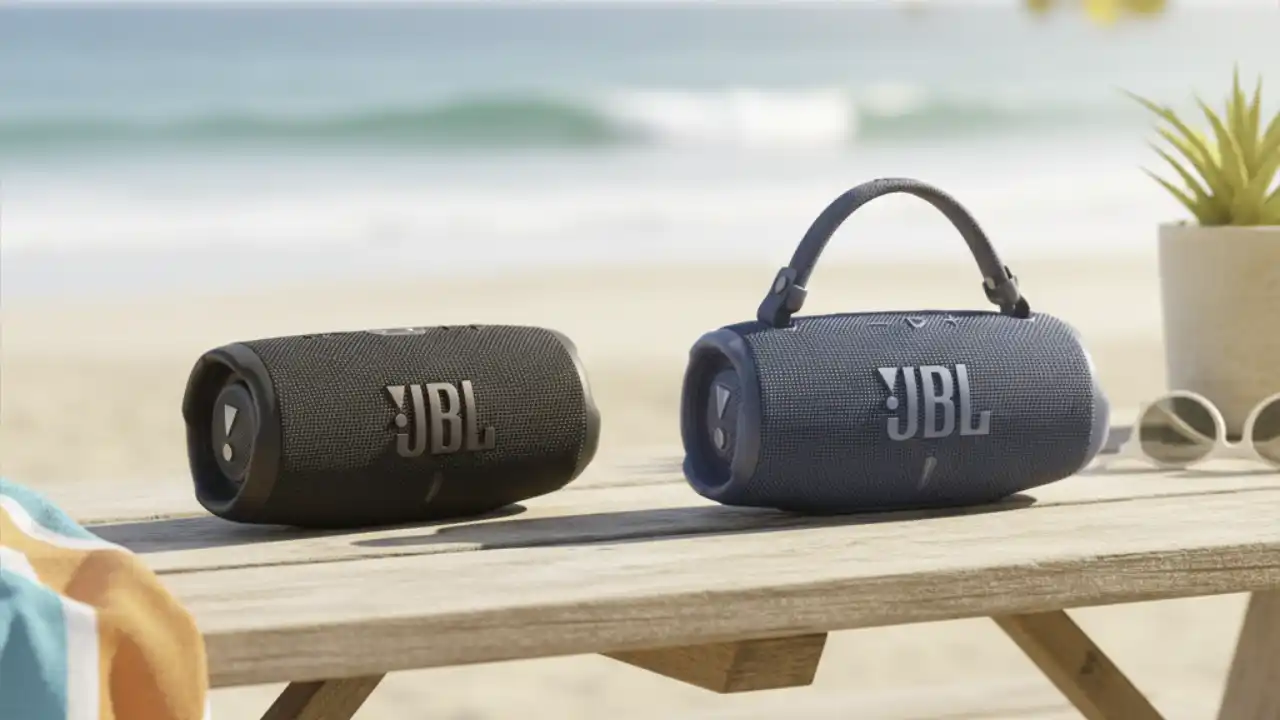
The JBL Charge 6 improves on the previous award-winning Charge 5 in many ways, but it's larger size and weight, along with several spec changes might make the older Charge 5 a better buy for some. For most though, the JBL Charge 6 is the one to get.
Disclosure: I bought these myself. No-one is sponsoring this article or has any input into what was written. All opinions in this article are honest, and my own.
I’ve owned the JBL Charge 5 for years, and it’s the most used Bluetooth speaker in my house. It’s been down the beach, to the park, covered in mud in the garden, chucked in the pool, and splashed with salt water. Through all of that, it’s been a rock-solid performer. So when JBL released the Charge 6, I had to ask: is this upgrade worth the extra money, and if you already have the JBL Charge 5, then is it worth upgrading to the Charge 6?
**Full disclosure**: This review contains affiliate links, which means I may earn a small commission if you purchase through them at no extra cost to you.
Design and Build Quality: Familiar Territory, with a Twist!
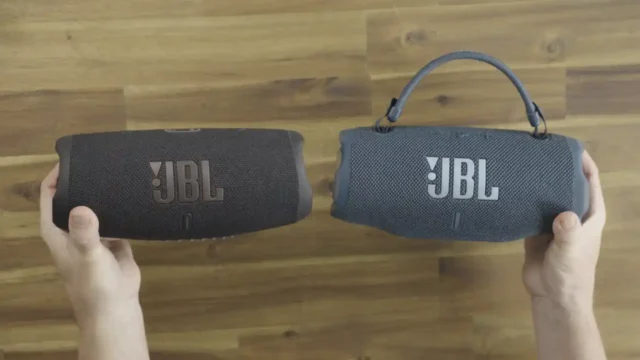
The JBL Charge 6 follows a similar design to the previous Charge 5, but with the Charge 6 being ever so slightly longer and wider. You really can only tell when you have them side by side though. The more noticeable difference is weight. The Charge 5 weighs 2.1 pounds (0.96 kilos), while the Charge 6 now weighs 3 pounds (1.37 kilos). That’s a significant jump you’ll feel if you aim to be carrying these around.
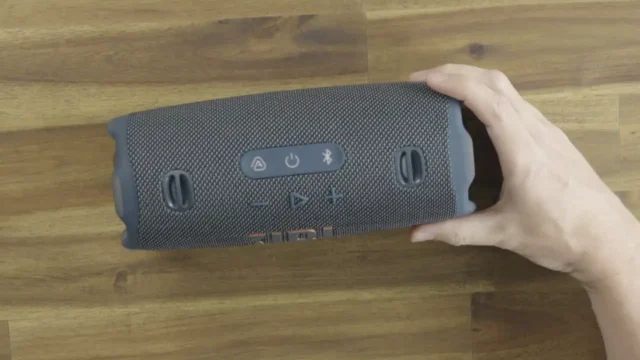
Both speakers feature the same fabric grill covering, but the control layout has changed. The Charge 5 places all the controls in a single row on the top of the speaker whereas the Charge 6 splits the controls across two rows. It’s a subtle difference but it does make it easier to distinguish between your volume and playback controls vs power and pairing controls. Importantly the volume buttons on the Charge 6 also function to skip tracks forwards or backwards via a double press, something the Charge 5 can’t do.
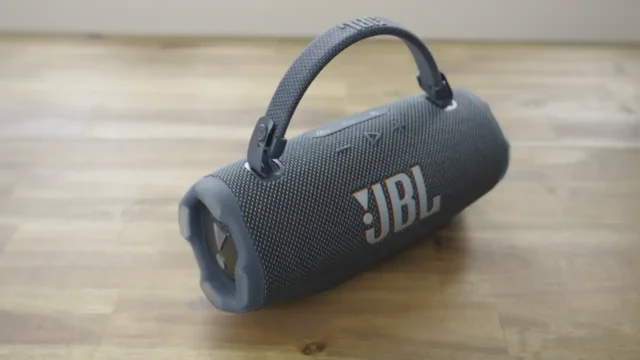
The most obvious physical difference between the two is the handle on the JBL Charge 6. For those that don’t like it though, It’s not fixed—you can remove it if you prefer—but it makes carrying the speaker noticeably easier, especially if you’re trying to carry a multitude of other things such as beach towels and other gear at the same time. The handle uses thin material that hooks over a button, so it doesn’t feel like the most robust design in the world so I wouldn’t go swinging it around though. For those that want more security, it might be worth swapping this out for your own paracord strap.
Repeating the consistent theme, both speakers have passive radiators on either end with rubber bumpers for protection. The Charge 5 has three protruding rubber bumpers, while the Charge 6 has four. This extra protection, combined with a more robust overall design, means the Charge 6 is now drop-rated to one meter. That said, my Charge 5 has survived years of rough treatment without any problems.
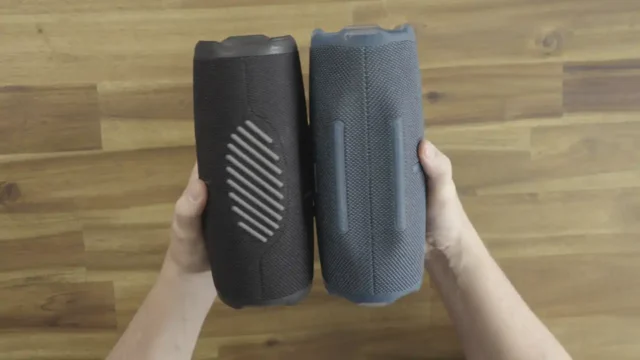
The bottom design has also changed. The Charge 5 uses thin rubber slits across the base to prevent sliding on tables when playing music. These can peel off over time—mine started coming loose after years of use but can easily be glued back down again. Still, the Charge 6 replaces these with two bigger rubberized bars that should prove more durable while still preventing the speaker from moving around, although only time will tell with that one.
Key Differentiators: What Sets the Charge 6 Apart
The Charge 6 brings three major improvements that distinguish it from its predecessor. First, the USB-C port on the back now serves dual purposes. Unlike the Charge 5, which only uses USB-C for charging, the Charge 6’s USB-C port can also play music over a wired connection. If you need wired connectivity, this could be a killer feature.
Second, JBL has dropped Party Boost in favor of Auracast for connecting multiple speakers. Party Boost allowed you to connect the Charge 5 to other compatible JBL speakers to play the same music simultaneously. Auracast does the same thing, but it’s not backwards compatible with Party Boost. If you already own older JBL speakers, they won’t connect with the Charge 6. If this is your first JBL speaker or you don’t care about multi-speaker connectivity, this change won’t affect you.
Third, the app experience is dramatically better. The Charge 5 only has a three-band EQ in the JBL mobile app, giving you limited control over sound customization. The Charge 6 comes with a seven-band custom EQ, making a massive difference if you like to tweak treble, bass, and everything in between. If you’re satisfied with how speakers sound out of the box, this won’t matter much. But if you’re the type who fiddles with sound settings, the expanded EQ is a significant upgrade.
More, More, More!
The Charge 5 delivers 40 watts of power—30 watts from the woofer and 10 from the tweeter—with a frequency response range of 60 Hz to 20 kHz. The Charge 6 bumps this to 45 watts total, with 30 watts from the woofer and 15 from the tweeter. The frequency response drops slightly lower to 56 Hz to 20 kHz, which means better bass response on paper, though the difference is subtle.
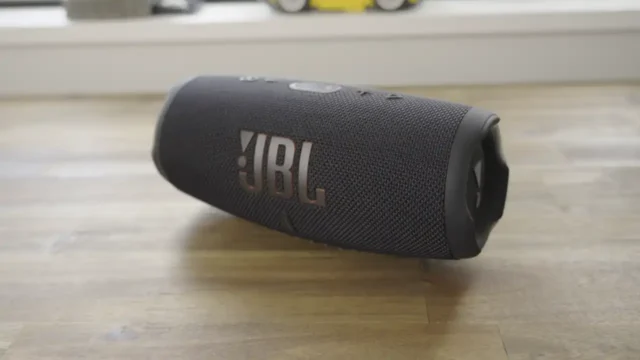
Both speakers connect via Bluetooth, and both are compatible with the JBL mobile app. One important note: both speakers are essentially mono, with just one woofer and one tweeter each. That’s typical for most portable Bluetooth speakers these days, but if you want true stereo, you’ll need to buy two speakers and pair them together for left and right channels. That obviously doubles your cost.
Waterproofing differs slightly between models. The Charge 5 carries an IP67 rating for dust and water resistance, while the Charge 6 is IP68 rated. In practical terms, this difference doesn’t matter much because both speakers float. If you drop either in a pool or off the side of a boat, they’re easy to retrieve from the water. This is a significant advantage over speakers like the JBL Flip 7, which would sink straight to the bottom. If you’re using these speakers on a boat, the floating capability makes either Charge model a smart choice.
Battery Life and Charging: Longer Playtime, Faster Charging
The “Charge” name refers to these speakers’ ability to charge other devices, which requires hefty batteries. The Charge 5 packs 20 hours of battery life and can charge devices through either its USB-C or USB-A port on the back. This is genuinely handy when you’re camping or at the park and your phone starts dying.
The Charge 6 improves on this with 24 hours of battery life, and you can still use the USB-C port to charge connected devices. Charging speeds aren’t blazing fast on either model, though. The Charge 5 lacks fast charging entirely and takes four hours to reach full charge. The Charge 6 takes three hours for a full charge but adds fast charging capability—a 10-minute charge gives you 150 minutes of playback.
The Charge 6 also includes a “playtime boost” feature that adds an extra four hours of playback. I don’t recommend using it though. When you enable playtime boost on any JBL speaker with this feature, it basically kills the bass. Even without playtime boost, 24 hours on the Charge 6 is impressive. The Charge 5’s 20 hours isn’t bad either—the Charge 6 is just better.
Performance: Better Bass, Smoother Highs
In direct comparison, the Charge 6 sounds noticeably better than the Charge 5, particularly at higher volumes. You can definitely hear the extra bass in the Charge 6, thanks to that slightly lower frequency response. The treble is more subdued on the Charge 6—you can still hear it clearly, but it’s not as harsh, especially when you push the volume up.
The Charge 5 starts to sound harsh when you crank it to high volumes, while the Charge 6 handles those same volumes better without distorting or becoming fatiguing. The improvement isn’t night and day, but it’s real and noticeable when you test them side by side.
One limitation applies to both speakers: they’re mono, not stereo. This is standard for portable Bluetooth speakers, but it’s worth noting if audio staging matters to you. The workaround is buying two speakers and pairing them for true left and right stereo channels, though that doubles your investment.
Real-World Experience: Proven Durability, Enhanced Usability
My Charge 5 has been everywhere with me. It’s survived beach trips with sand and salt water, pool parties where it’s been fully submerged, muddy garden sessions, and countless drops and bumps. After years of this treatment, it still works perfectly. The only visible wear is the slight peeling on those thin rubber strips on the bottom.
The Charge 6’s improvements address some practical frustrations I had with the Charge 5. The handle genuinely makes carrying easier, especially when you’re juggling multiple items. The more durable rubber bars on the bottom should outlast the thin strips that started peeling on my Charge 5. The improved sound quality at high volumes means less fatigue during longer listening sessions.
Both speakers float, which I’ve tested extensively. If you drop either in water, it bobs right at the surface, making retrieval easy. This floating capability combined with their waterproof ratings makes them ideal for poolside use, boating, or beach trips where water exposure is inevitable.
The Verdict: To Buy Or Upgrade?
The JBL Charge 6 is the better speaker. It has better battery life, better sound, and more features, but the improvements are incremental rather than revolutionary. So, if you already own a JBL Charge 5 I don’t think there’s enough reasons to warrant the upgrade. Unless you specifically need the newer features that the JBL Charge 6 has, such as the USB-C audio input or Auracast compatibility.
If you’re trying to decide which to buy then the retail price of both is so close (there’s only a $20 difference) then it’s hard not to recommend the JBL Charge 6. It’s a cracking speaker. Plus it’s frequently on sale and was down to $135 at the time of this review. So it definitely pays to shop around.